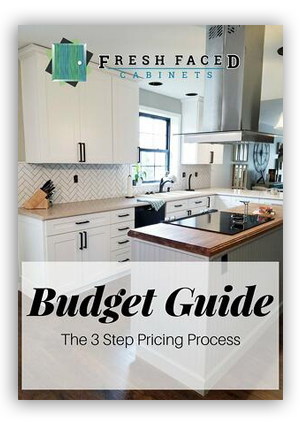
A lot of St. Louis kitchens got granite somewhere around 2006. The counters still look good, they cost real money, and now the cabinets underneath them have aged into a different decade. The question we get more than almost any other is whether the cabinets can be dealt with without losing the tops. Usually yes, and that decision alone is often the difference between a project you can do this year and one you keep putting off.
Why the countertop is the expensive thing to touch
Stone rarely survives removal. It is bonded down, it is heavy, it is cut to your exact run, and the seams and the sink cutout are specific to the cabinets that are under it right now. Once it comes off, you are usually buying a new one, and you are also buying a new sink, new faucet fitting, template time and a second install day.
So a project that starts as "I hate these cabinet doors" quietly turns into a project with a countertop line item bigger than the cabinets. That is the hidden cost inside a lot of replace-everything quotes, and it is the one people do not see coming.
David and Stephanie put it plainly in their own guide: you can save thousands by keeping a good countertop and designing around it. And there is a second effect people do not expect. With new doors and new finishes around it, the old countertop stops reading as old. It reads as the thing that was chosen deliberately.
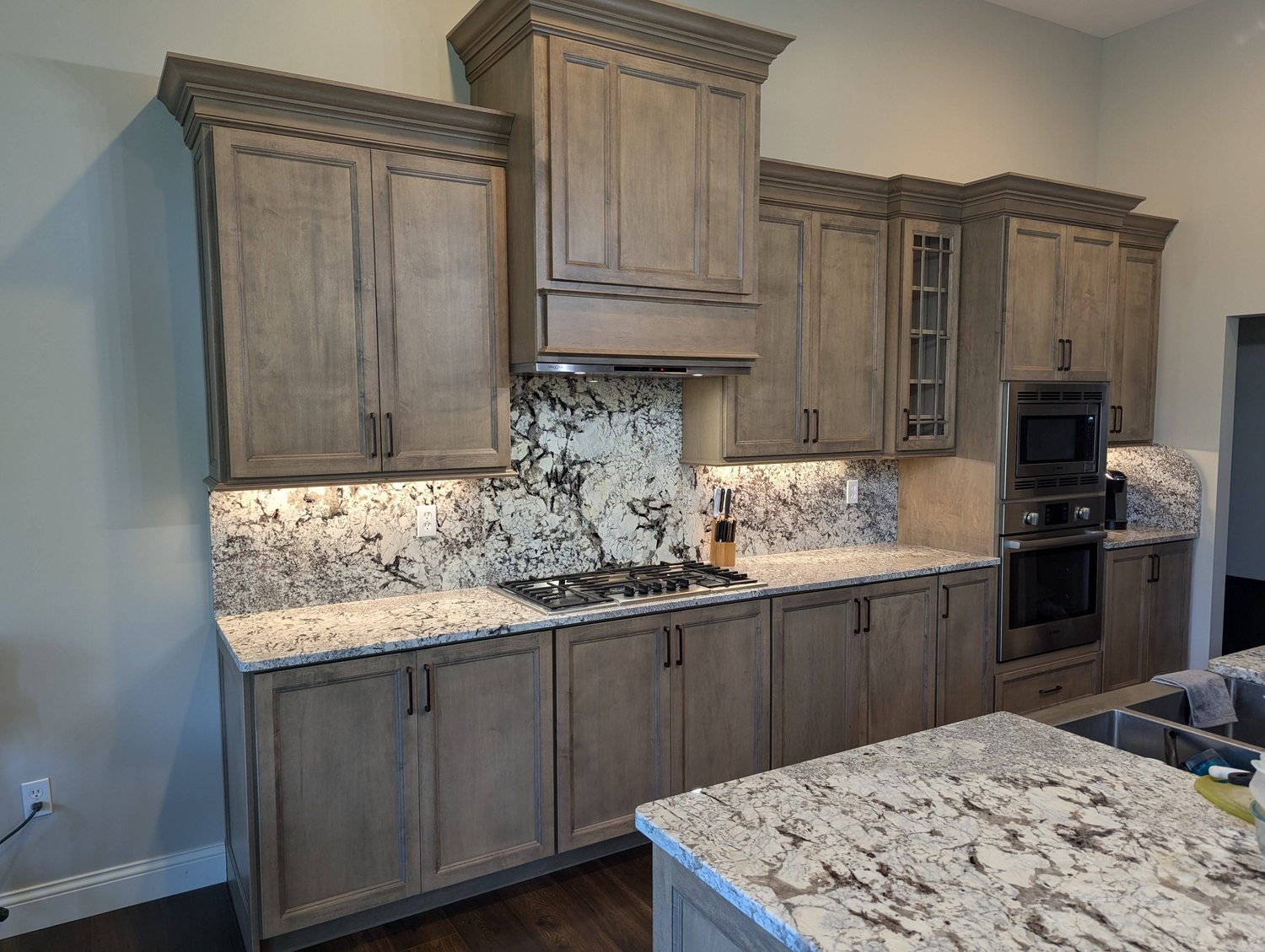
The granite is original to the house. Everything above and below it changed. With new fronts around it, stone that read as dated reads as chosen.
When the counters can stay
The counters stay when the base cabinets stay. That is the whole rule, and it is simpler than most people assume.
If the boxes underneath are sound and the layout is not changing, we work around the stone. Doors and drawer fronts come off, the boxes and face frames are finished to match the new fronts, hardware and hinges are replaced, and the countertop never moves. Crown, light rail, end panels and a hood surround can all go in with the tops in place.
That is the most common project we do, and it is the reason a lot of kitchens land in the Fresh Faced Refresh range of $12,000 to $18,000 rather than somewhere considerably higher.
General planning range only, not a project quote. Kitchen size, materials, construction requirements, modifications and selected options can all significantly affect the final investment.
When they have to come off, and what that adds
There are three situations where the stone has to move, and it is worth knowing them before you fall in love with a plan.
- A base cabinet is being replaced. If the sink base is water damaged, or you want a run of deep drawers where a cabinet currently is, the top over that section has to come up.
- The island is changing size. Extending an overhang for seating, or enlarging the island, means a new top for the island even if the perimeter stays.
- You are adding cabinets where there were none. New run, new top.
Worth knowing: it is often only one section, not the whole kitchen, and a good fabricator can sometimes match or work with what is there. But there is also a schedule consequence. Countertops are measured after the new lower cabinets are physically set, which adds roughly two to three weeks to the finish date. That is not a cost, it is a calendar item, and it is the single most common reason a project runs longer than the homeowner expected.
Designing around stone you did not choose
The harder version of this question is not structural. It is that you are keeping a countertop you inherited and are not sure what goes with it.
A few things that consistently work:
- Pull a color out of the stone rather than matching it. Busy granite has four or five colors in it. Pick the quietest one and put it on the perimeter cabinets. The counter stops competing.
- Go two-tone. A contrasting island is the cleanest way to make a dated perimeter stone look intentional, because the eye reads the island as the decision and the rest as the frame.
- Let the trim do the work. Crown, a light rail and decorative end panels change how custom a kitchen reads far more than a color change does, and none of it touches the counter.
- Be honest about the backsplash. Often the backsplash is what dates the room, not the counter. We do not do tile, and we will tell you when the tile is the actual problem so you can budget for it separately.
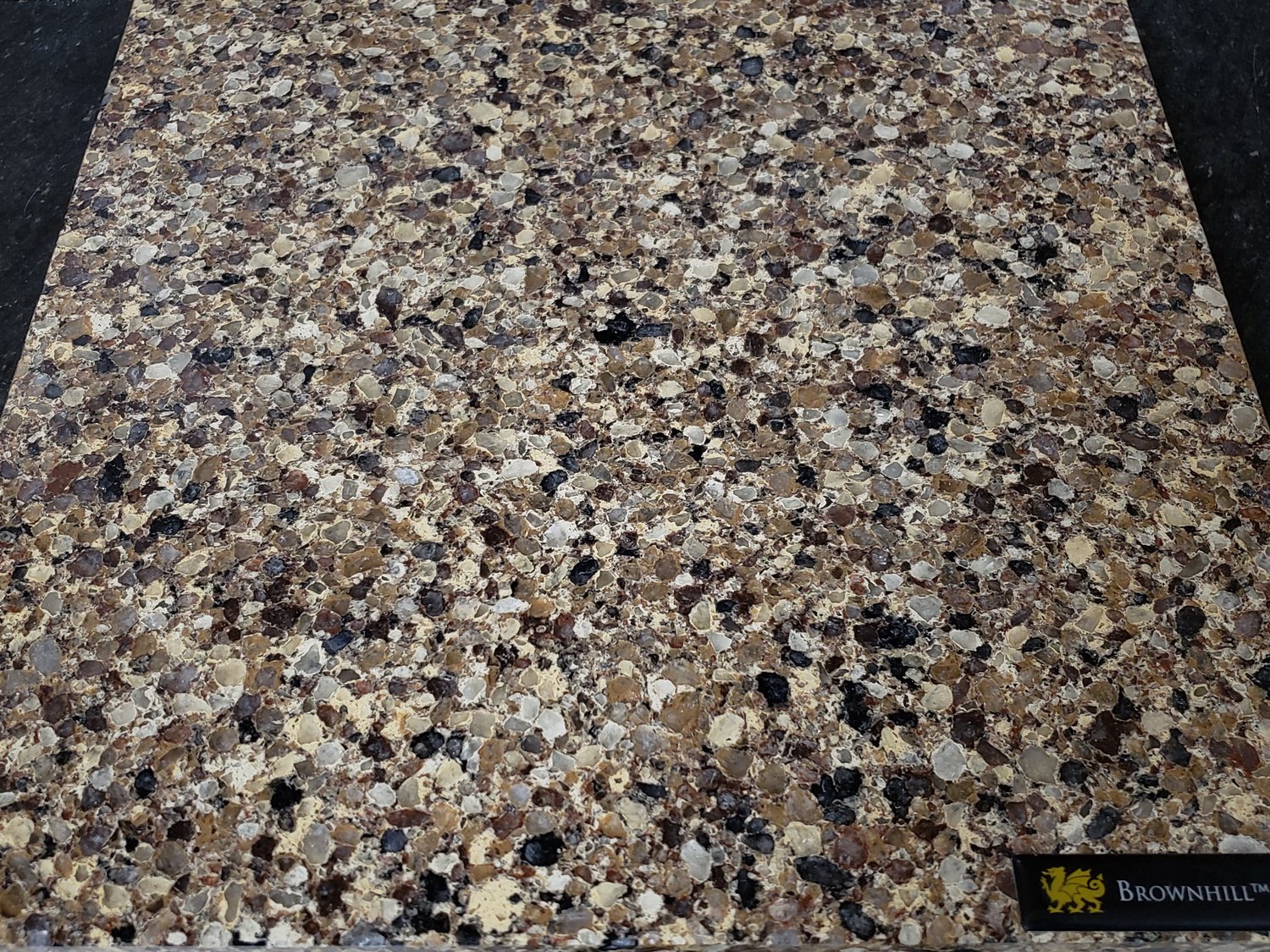
Selections get made against the countertop you are keeping, not in a showroom under different light. The stone is the fixed point and everything else is chosen around it.
The two-tone move, specifically
If you take one idea from this page, take this one. When a homeowner is keeping stone they are lukewarm about, a contrasting island is the highest-impact, lowest-risk change available. The perimeter goes quiet, usually a warm off-white or a soft grey. The island goes deep: navy, charcoal, a stained wood. Suddenly the kitchen has a focal point that is not the countertop, and the countertop becomes background instead of the thing you notice.
It is also cheap to do, relatively, because it is a finish decision rather than a construction one.
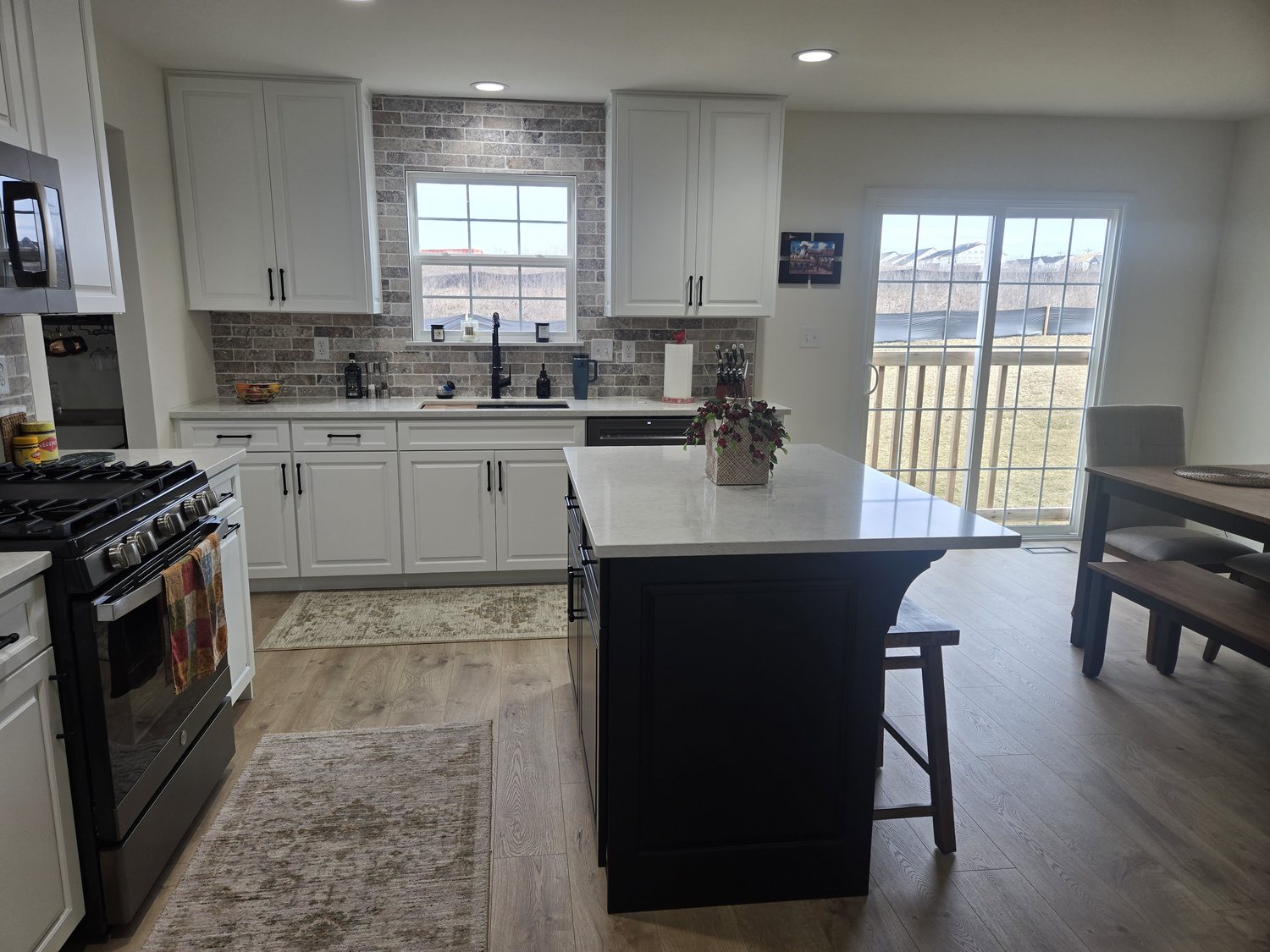
Two-tone. The perimeter goes quiet and the island carries the room. The counters did not move.
How to tell which situation you are in
Three questions, and you can answer all of them tonight.
- Is the cabinet under the sink dry and solid? Put your hand on the floor of it. If it is soft or swollen, that box is coming out, and the top over it is coming up.
- Is anything about the layout changing? Bigger island, new run of cabinets, a base cabinet becoming drawers. If nothing is moving, the counters stay.
- Do you actually like the stone, or have you just accepted it? Both are fine answers. But if you have quietly hated it for nine years, say so at the start, because the plan is different and the budget conversation happens once instead of twice.
Send a photo of the counter, not just the cabinets
When you send us photos, include one straight down at the countertop in daylight. The stone drives more of the design conversation than anything else in the room, and it is the one thing a photo of the cabinet doors does not show us.
Send four photos and one of the counter
Each wall of cabinets, one wide shot, and one looking down at the countertop. Text (314) 270-1233 or email refacing@freshfacedcabinets.com and tell us whether the stone is staying or whether you have been waiting for permission to lose it.
Sources
- Fresh Faced Cabinets pricing page, starting figures by kitchen layout.
- The Fresh Faced Formula, David and Stephanie Short, on keeping an existing countertop and on countertop measuring after new lower cabinets are set.
Dave and Stephanie have been updating St. Louis kitchens for over twenty years, working out of Crestwood and serving St. Louis County and City, St. Charles County, Jefferson County and the Metro East. Solid maple door fronts, our own installation team, and a final walkthrough with an owner on every project.
(314) 270-1233 · refacing@freshfacedcabinets.com · freshfacedcabinets.com